The European Conference on Computer Vision (ECCV2026) is one of the world’s leading international conferences in the field of computer vision and machine learning. Held every two years, it brings together leading researchers and experts from academia and industry to present and discuss the latest advances in the field. This year’s conference took place from 8 to 12 September 2026 in Malmö, Sweden. IML was represented with 3 contributions:
Robert Leist from the Interactive Machine Learning group presented the archival workshop paper “Foveate: Recursive Zoom for Training-Free, In-Context Instance Segmentation” at CV4E. The paper addresses the challenge of annotation which remains a bottleneck in many scientific domains, where images and target objects are out-of-distribution (OOD) for foundation models. The work introduces a training-free, in-context method, that uses recursive zooming and a memory bank to identify objects in OOD images of marine ecology. The authors demonstrate the soundness of individual modules, and, as a proof-of-concept, show that Foveate achieves performance comparable to SAM 3, a model 40 times larger, and even outperforms it, if replacing one of its modules with an oracle. The work is still ongoing, and the valuable feedback received from the ECCV audience will help further improve the approach. The same topic was also presented in a non-archival short paper at ILRnG.
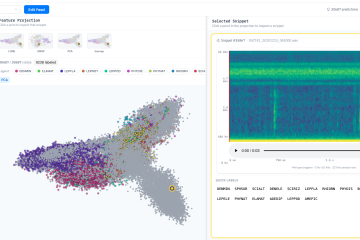
In addition, Robert presented IQUANA – an intelligent annotation platform – as a demo. Visitors responded very positively to the tool and many were interested in trying it out themselves.
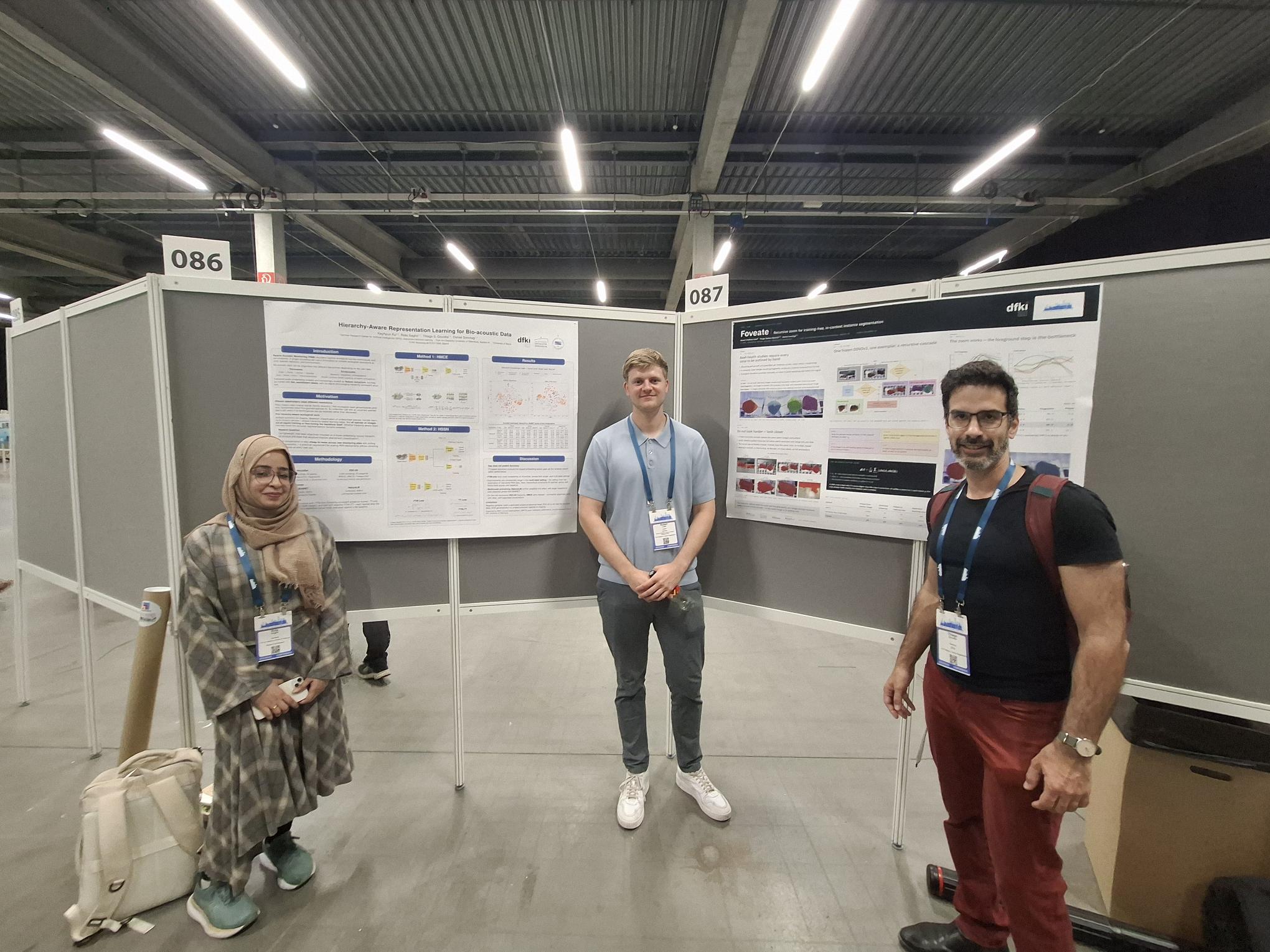
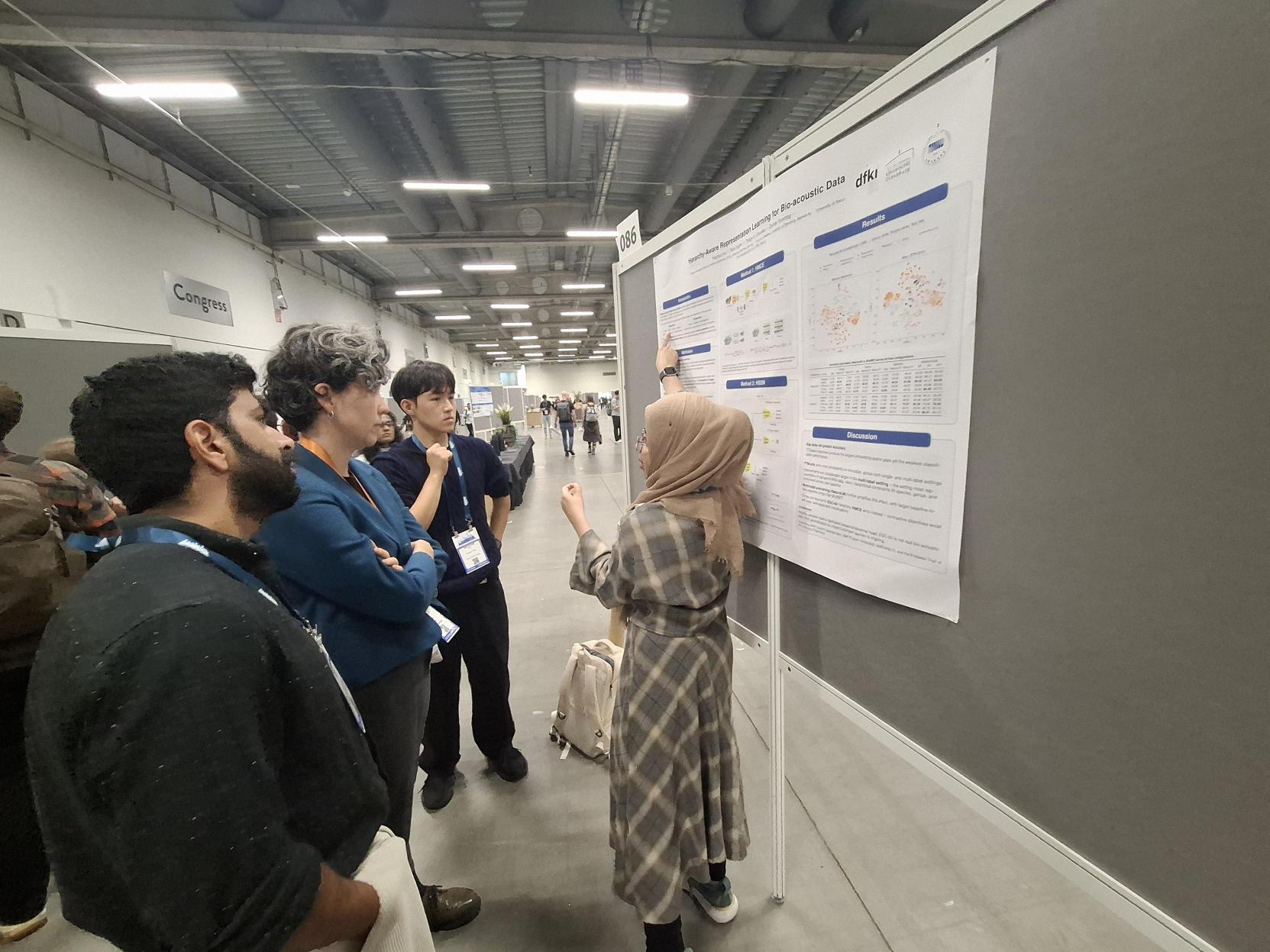
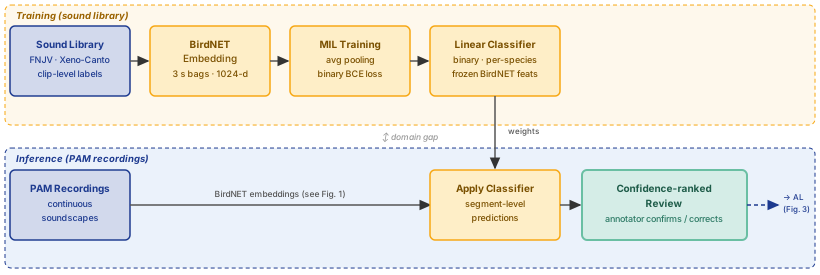
Rida Saghir from the University of Oldenburg’s Chair of Applied Artificial Intelligence and the Interactive Machine Learning group presented the workshop paper “Hierarchy-Aware Representation Learning for Bio-acoustic Data” at CV4E: This paper addresses the challenge that flat classification does not capture the ecologically rich information in bioacoustic recordings. Flat classification models treat all labels as equally distinct, so a mistake can land on an unrelated species, and the sample may be discarded without ever reaching an expert. Hierarchical objectives allow a model to fall back on the broader taxonomic group: even when the exact species is uncertain, the presence of, for example, a bird or a frog can still be established. The paper transfers hierarchical objective functions from computer vision to bioacoustics, teaching models taxonomic relationships from broad groups down to species. The work shows particular potential for multilabel datasets, which are typical of passive acoustic monitoring.