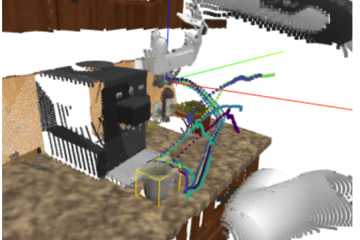
4D reasoning from demonstration data for VLA

Visual-Language-Action (VLA) models are typically trained through imitation learning, which teaches policies to reproduce demonstrated actions but provides limited supervision about the conditions that define task success. We propose a framework that automatically extracts executable 3D task verifiers from demonstrations and uses them to improve policy learning beyond imitation. Given Read more

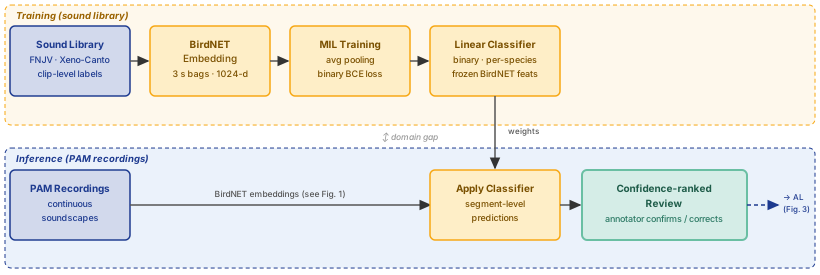
Machine Learning for Passive Acoustic Wildlife Monitoring: Methods for Semi-Automated Population and Species Assessment

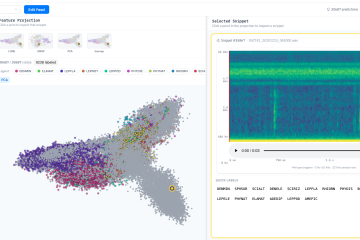
Passive acoustic monitoring (PAM) has become a powerful tool for studying wildlife by continuously recording environmental soundscapes. However, analysing large acoustic datasets remains highly time-consuming, as recordings are often annotated manually by domain experts. In this work, we investigate how machine learning can support scalable biodiversity monitoring by enabling efficient Read more

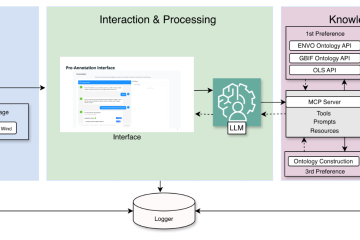
Grounded Label Space Engineering for Knowledge-Centric Annotation Workflows

Building reliable AI models depends not only on how much data is annotated, but on the quality and meaning of the labels used during annotation. In many workflows, labels are flat, task-specific class names. They are easy to apply, but lack explicit semantic structure, provenance, and links to shared domain Read more

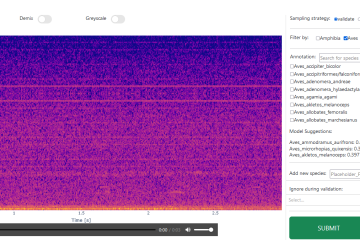
IQUANA: Efficient Image Annotation and Quantification

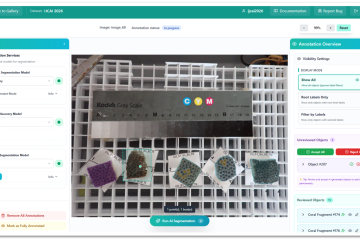
Image annotation remains a significant bottleneck in image analysis pipelines. In research settings especially, annotating large image corpora demands substantial effort, often forcing teams to compromise on quality by resorting to coarser methods like point annotations rather than full outlines. To address this, we collaborated with the Helmholtz Institute for Read more