The Interactive Machine Learning (IML) department was represented at the 29th International Conference on Medical Image Computing and Computer-Assisted Intervention (MICCAI 2026) in Strasbourg, France. MICCAI is widely recognized as a leading international venue for medical image computing, computer-assisted intervention, and AI in medicine.
At the MICCAI Student Board EMERGE Workshop – Empowering Medical Information Computing and Research through Early-career Guidance and Expertise, IML contributed two oral presentations addressing important challenges in multimodal medical AI and medical image analysis.
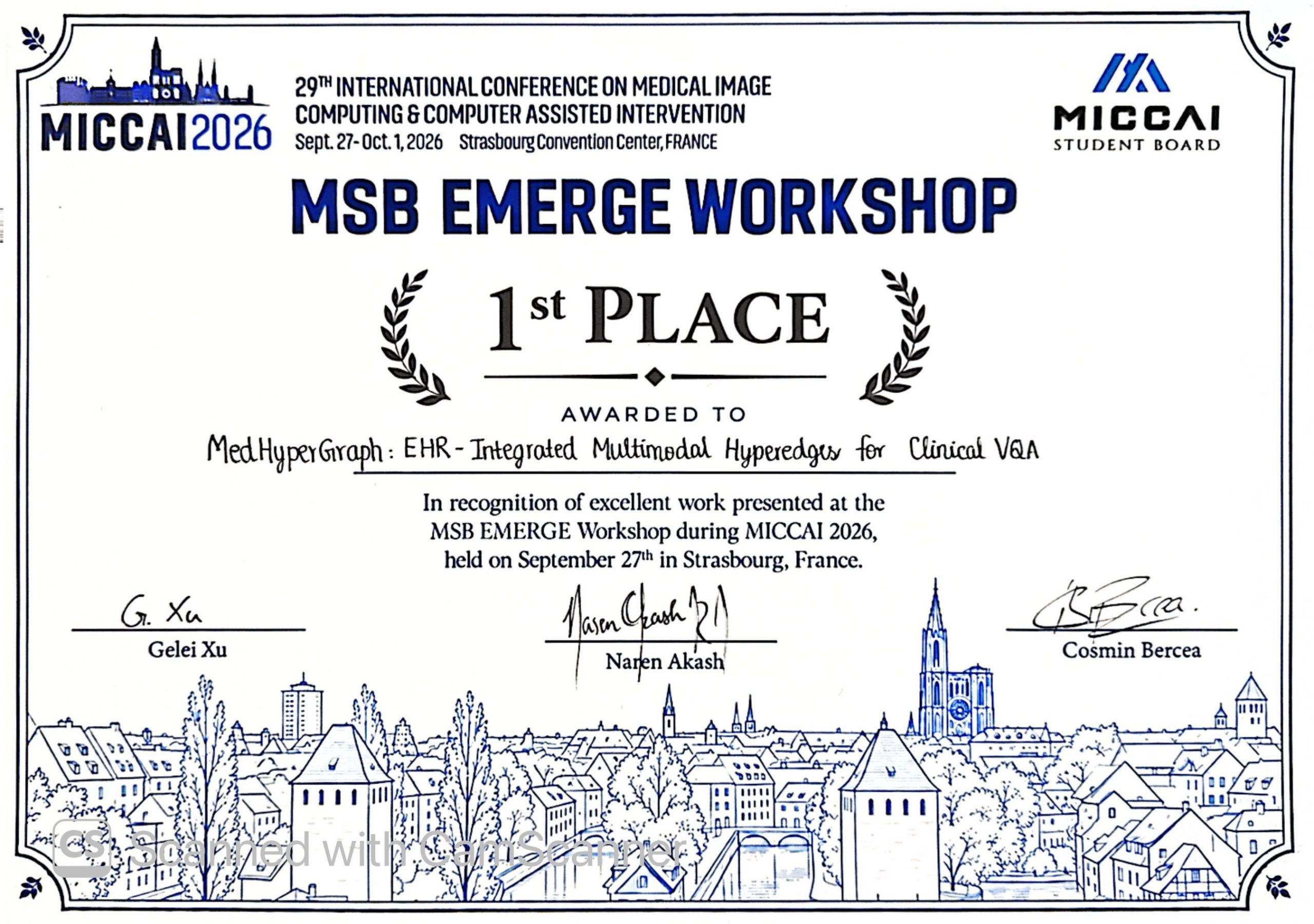
Hasan Md Tusfiqur Alam presented “MedHyperGraph: EHR-Integrated Multimodal Hyperedges for Clinical VQA”, which introduces a multimodal hypergraph approach for clinical visual question answering that integrates imaging studies with structured and longitudinal information from electronic health records. Rather than simply increasing the amount of retrieved clinical text, the approach preserves temporal and higher-order relationships between clinical events. The results demonstrate the importance of structured clinical context for reasoning across longitudinal patient data. MedHyperGraph received the Best Paper Award at the EMERGE Workshop.
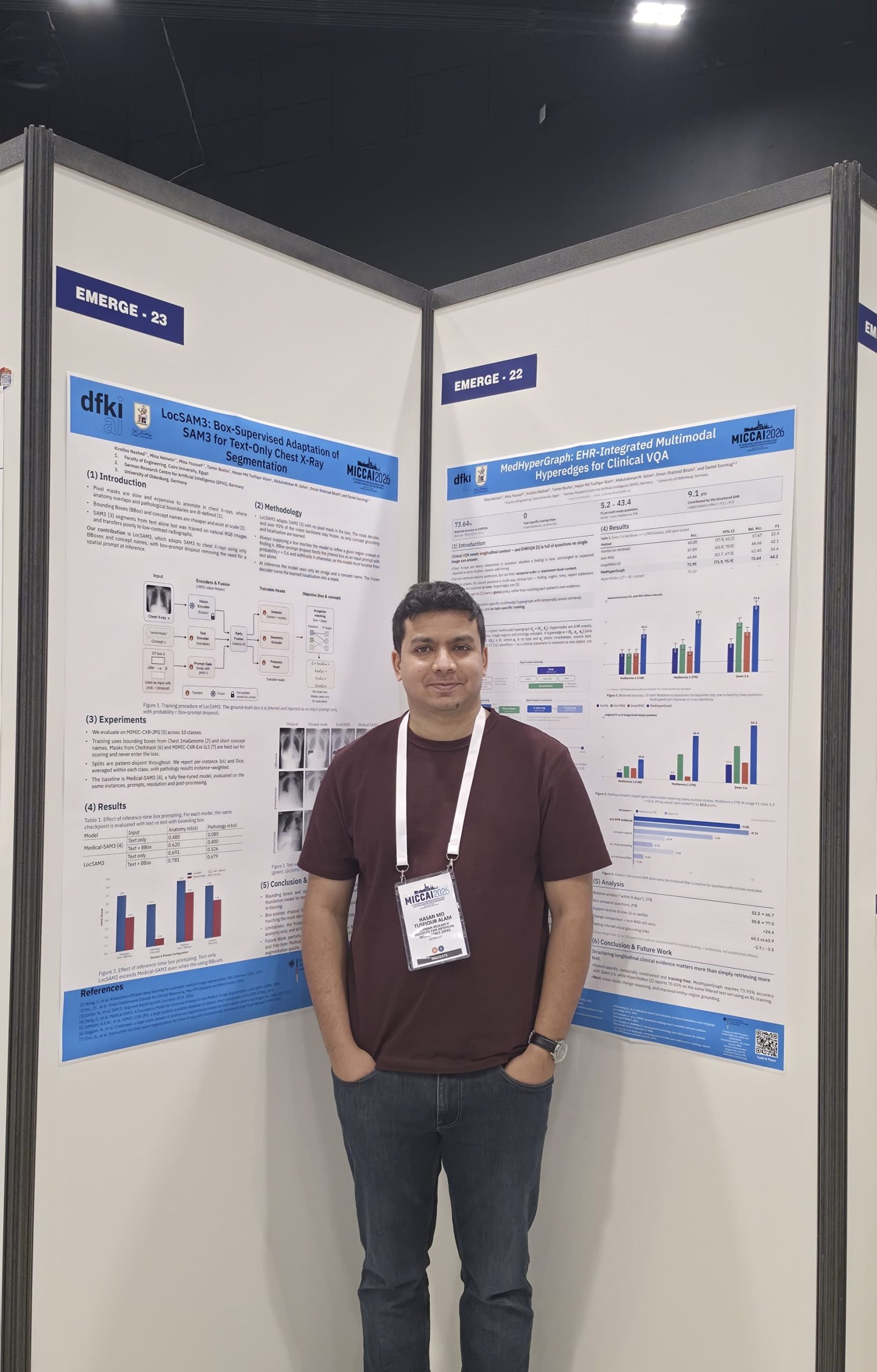
Hasan Md Tusfiqur Alam at the conference
Abdulrahman M. Selim presented “LocSAM3: Box-Supervised Adaptation of SAM3 for Text-Only Chest X-Ray Segmentation”, which investigates whether dense pixel-level annotations are necessary to adapt foundation segmentation models to medical imaging. LocSAM3 uses only bounding boxes and concept names during training and requires only an image and a textual concept at inference. The results show that coarse localization supervision can effectively support text-driven pixel-level segmentation of anatomical structures and pathological findings in chest X-rays.
Together, the two contributions reflect IML’s ongoing research on multimodal medical AI, structured clinical reasoning, and data-efficient adaptation of foundation models, with the goal of developing medical AI systems that can make better use of heterogeneous clinical information while reducing costly annotation requirements.
Congratulations to everyone involved, and especially to the MedHyperGraph team on receiving the Best Paper Award!
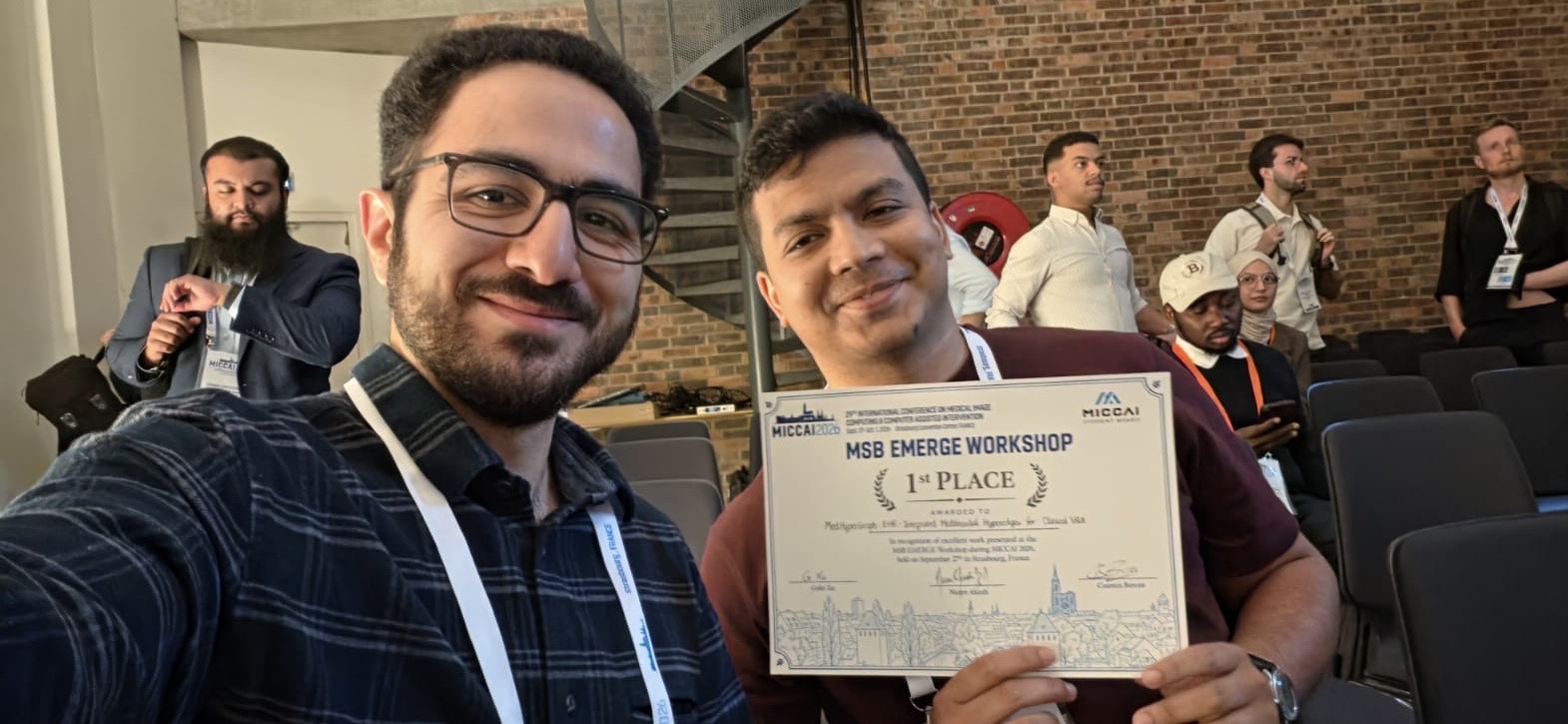
Abdulrahman M. Selim and Hasan Md Tusfiqur Alam with the Best Paper Award